
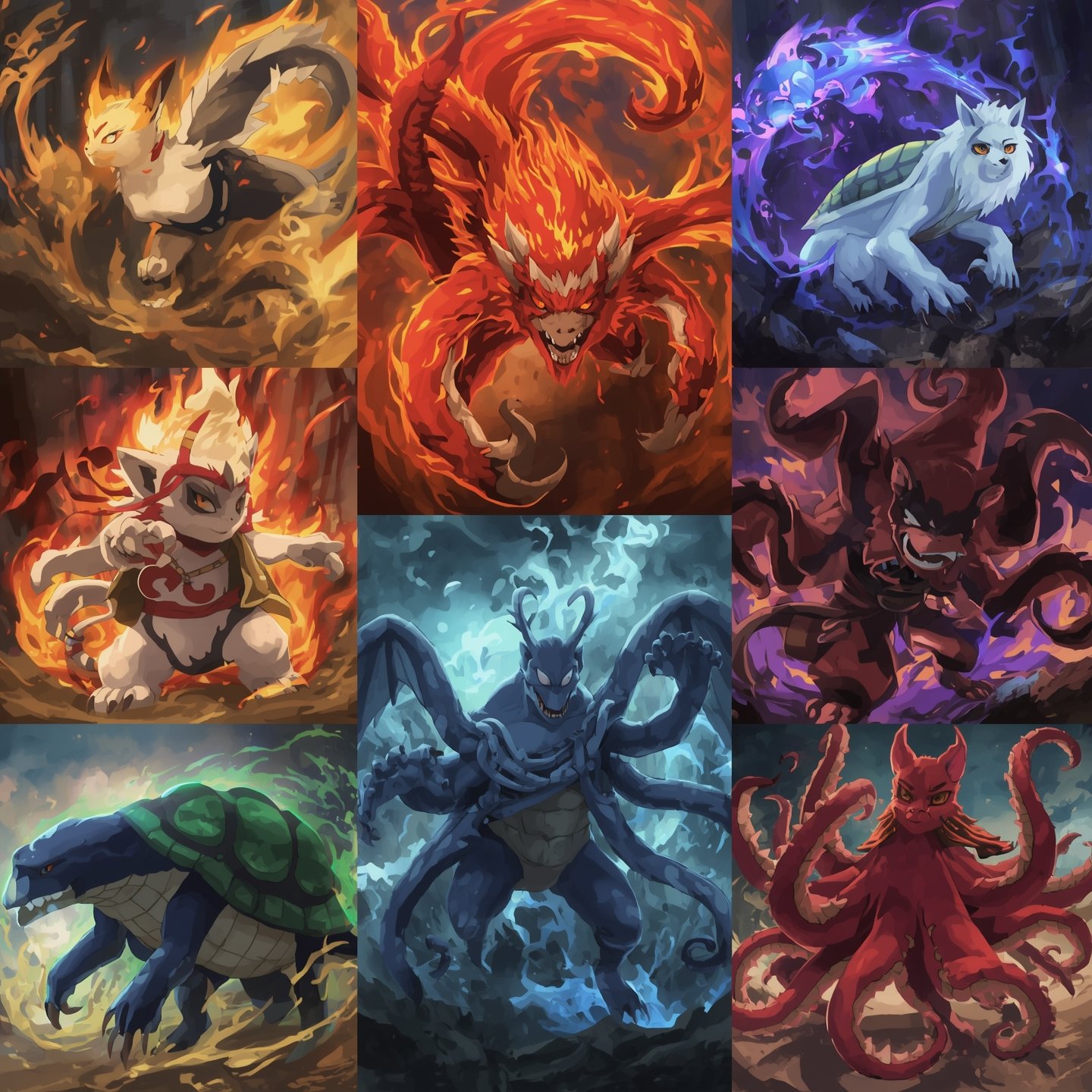
Tailed Beasts Guide(2025): Naruto’s Powerful Bijuu & Their Secrets
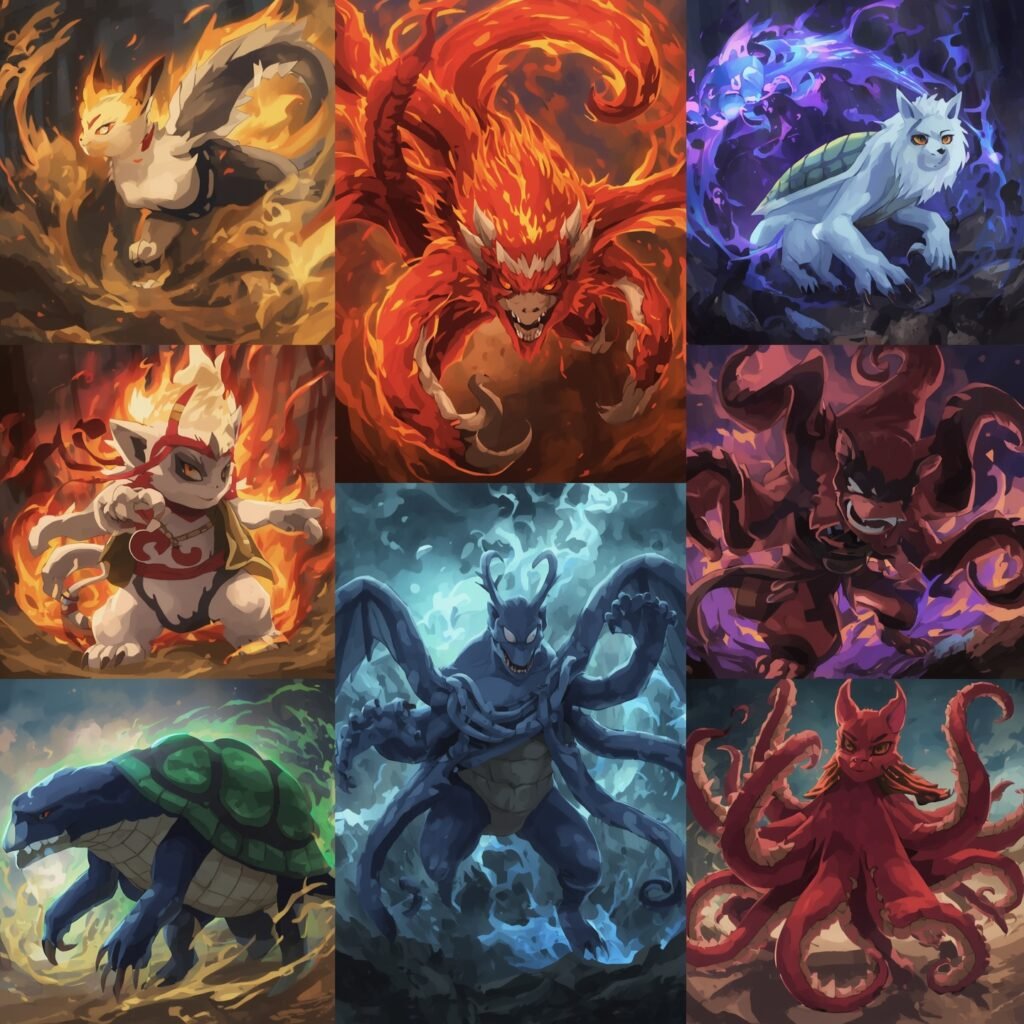
Tailed Beasts Guide: In the vast world of Naruto, few forces command as much awe and fear as the Tailed Beasts—massive, sentient chakra monsters whose power can shape the fate of entire nations. Known as Bijuu, these legendary entities are not mere weapons; they are living embodiments of raw chakra, each possessing a distinct personality, abilities, and history intertwined with the shinobi world. From the sand-swept cunning of Shukaku, the One-Tail, to the fiery wrath of Kurama, the Nine-Tails, every Bijuu has left a lasting mark on the course of ninja history.
Their origins trace back to the Ten-Tails, the primordial force of chakra, and over centuries, these powers were split and sealed into individual beasts, each bound to human hosts known as Jinchuriki. Understanding the Tailed Beasts is not only crucial for comprehending the battles and politics of the Naruto universe, but also for exploring themes of trust, friendship, and the complex balance between power and responsibility.
This guide delves deep into the secrets, abilities, and histories of each Tailed Beast, providing unparalleled insight into their unique strengths and the pivotal role they play in shaping the ninja world. Whether you are a hardcore fan, a researcher of anime lore, or a newcomer seeking to grasp the essence of these living legends, this resource offers an authoritative, comprehensive, and fully original exploration of Naruto’s most formidable forces.
In the Naruto universe, there are 9 officially recognized Tailed Beasts (Bijuu), plus the Ten-Tails (Jūbi), which is the original source of all chakra and technically counts as the 10th. Here’s a full list with their names and tails:
- Shukaku – One-Tail (Sand Tanuki-like Beast)
- Matatabi – Two-Tails (Flaming Blue Cat)
- Isobu – Three-Tails (Coral-Shelled Turtle)
- Son Gokū – Four-Tails (Red-Furred Monkey with Lava Powers)
- Kokuō – Five-Tails (Horse-Dolphin Hybrid)
- Saiken – Six-Tails (Slime-Like Beast)
- Chōmei – Seven-Tails (Blue Insect/Beetle with Wings)
- Gyūki – Eight-Tails (Octopus-Ox Hybrid)
- Kurama – Nine-Tails (Red Fox)
- Jūbi (Ten-Tails) – The Original Beast from which all others originated
Shukaku – One-Tail (Sand Tanuki-like Beast)
Among the legendary Tailed Beasts of the Naruto universe, Shukaku, the One-Tail, stands out as a creature of cunning, resilience, and raw destructive power. Resembling a sand-patterned tanuki, Shukaku is more than a living weapon—it is a sentient entity with its own personality, capable of independent thought and formidable chakra manipulation. Revered and feared in equal measure, Shukaku embodies the harsh, unforgiving essence of the desert, wielding sand with precision to overwhelm foes and protect its territory.
Originating from the Ten-Tails, Shukaku’s chakra was split and sealed into this singular beast, granting it unparalleled control over sand-based techniques. Over time, Shukaku formed a complex bond with its Jinchuriki, most notably Gaara of Sunagakure, shaping not only the shinobi’s immense power but also his personal journey of trust, fear, and identity.
Unlike some Tailed Beasts, Shukaku is known for its pragmatic, sometimes mischievous temperament, capable of both cooperation and rebellion depending on circumstances. Its influence extends beyond mere combat, affecting village politics, the balance of power in the ninja world, and the philosophical questions surrounding human-Bijuu coexistence.
This comprehensive exploration reveals Shukaku’s unique abilities, history, and impact on the Naruto narrative, offering readers an authoritative and immersive understanding of the One-Tail’s enduring legacy. For fans, scholars, and newcomers alike, Shukaku exemplifies how raw power, strategy, and personality combine to make a Tailed Beast not just a weapon, but a living legend.
Read More: Shukaku (One-Tail) 2025 – Learn the Inspiring Naruto Beast Story of Power & Legacy
Matatabi – Two-Tails (Flaming Blue Cat)
Among the formidable Tailed Beasts of the Naruto universe, Matatabi, the Two-Tails, is a creature of unparalleled speed, agility, and fiery intensity. Resembling a gigantic, flaming blue cat, Matatabi is a living embodiment of raw chakra, its body wreathed in ghostly blue flames that can incinerate anything in its path. Unlike many Tailed Beasts, Matatabi exudes an aura of elegance and ferocity simultaneously, combining feline grace with overwhelming destructive power.
Born from the chakra of the Ten-Tails, Matatabi was sealed into a human host, the Jinchuriki Yugito Nii of Kumogakure, forming a bond that amplified both the beast’s power and the shinobi’s combat capabilities. Its flames are not mere fire—they are pure chakra manifestations, capable of long-range attacks, defensive barriers, and devastating close-combat strikes.
Matatabi’s personality reflects its nature: independent, proud, and fiercely loyal to its host when trust is established. Its presence in the ninja world shaped critical battles, influenced the balance of power between nations, and illustrated the delicate interplay between a Bijuu’s will and human morality.
This detailed examination of Matatabi unveils its unique abilities, history, and influence on the narrative, offering fans and newcomers a profound understanding of the Two-Tails’ role in shaping the Naruto universe. Matatabi exemplifies how speed, elemental mastery, and sentient intelligence converge in a living legend, making it one of the most awe-inspiring Tailed Beasts of all time.
Isobu – Three-Tails (Coral-Shelled Turtle)
In the pantheon of Naruto’s Tailed Beasts, Isobu, the Three-Tails, stands as a symbol of resilience, defense, and aquatic might. This massive, coral-shelled turtle possesses unparalleled durability, its body armored with natural coral ridges capable of withstanding even the fiercest attacks. Unlike many of its counterparts, Isobu’s strength lies not in speed or aggression but in strategic defense, crushing force, and mastery over water-based chakra techniques that can reshape battlefields.
Born from the primordial chakra of the Ten-Tails, Isobu was sealed into human hosts known as Jinchuriki, including Yagura Karatachi of Kirigakure, granting them extraordinary abilities in both combat and village governance. Isobu’s connection with water allows it to manipulate tides, summon massive waves, and utilize coral and aquatic formations as both shields and weapons, making it an essential force in large-scale conflicts.
Isobu’s personality reflects a mix of wisdom and patience, tempered by a fierce protective instinct. Though not as outwardly ferocious as Kurama or Matatabi, its presence commands respect, influencing not only individual battles but the broader power dynamics between shinobi nations.
This comprehensive analysis explores Isobu’s powers, history, and significance in the Naruto narrative, providing readers with an authoritative understanding of the Three-Tails’ enduring legacy. Isobu exemplifies how defensive mastery, strategic intelligence, and elemental control converge to create a Bijuu whose power is both subtle and devastating, solidifying its place among the most formidable Tailed Beasts.
Son Gokū – Four-Tails (Red-Furred Monkey with Lava Powers)
Among the legendary Tailed Beasts of the Naruto universe, Son Gokū, the Four-Tails, is a creature of raw power, fiery temperament, and elemental mastery. Resembling a massive red-furred monkey, Son Gokū wields the destructive force of lava-based chakra, capable of melting terrain, launching molten projectiles, and overwhelming enemies with unstoppable heat and brute strength. Its combination of primal ferocity and strategic combat instincts makes it one of the most formidable Bijuu in both offense and defense.
Originating from the Ten-Tails, Son Gokū’s chakra was sealed into Jinchuriki, most notably Rōshi of Iwagakure, enabling them to harness its devastating lava techniques. Unlike some Tailed Beasts, Son Gokū exhibits a volatile personality, reflecting its fiery nature—prone to aggression yet capable of forming powerful bonds with a host who earns its respect.
Son Gokū’s abilities extend beyond raw destruction. Its control over lava allows it to reshape battlefields, manipulate the environment, and execute precision strikes, making it not only a weapon of chaos but a tactical force in large-scale conflicts. The Four-Tails’ presence in the ninja world underscores themes of power, control, and the complex relationship between Bijuu and human hosts.
This in-depth exploration of Son Gokū illuminates its unique powers, personality, and influence on the Naruto narrative, offering fans and newcomers a comprehensive understanding of the Four-Tails. Son Gokū exemplifies how elemental mastery, primal strength, and sentient intelligence converge, cementing its legacy as one of the most awe-inspiring Tailed Beasts in shinobi history.
Kokuō – Five-Tails (Horse-Dolphin Hybrid)
In the realm of Naruto’s legendary Tailed Beasts, Kokuō, the Five-Tails, is a marvel of both raw power and agility, combining the strength of a horse with the aquatic grace of a dolphin. Its unique physiology allows Kokuō to harness steam-based chakra techniques, which can enhance its speed, augment its physical attacks, and create devastating bursts of energy capable of obliterating enemy fortifications. This fusion of brute force and elemental mastery makes Kokuō a singularly formidable Bijuu, excelling in both land and water combat scenarios.
Originating from the primordial chakra of the Ten-Tails, Kokuō was sealed into human hosts, most notably Han of Iwagakure, granting them extraordinary combat abilities and tactical advantage. Its personality reflects a harmonious blend of loyalty, discipline, and unyielding strength, forming a unique bond with its Jinchuriki that enhances both their resilience and strategic prowess on the battlefield.
Kokuō’s steam-based techniques provide versatility in combat, allowing it to launch high-pressure attacks, manipulate the environment, and combine raw strength with precise strikes. Beyond its battlefield impact, Kokuō symbolizes the nuanced relationship between a Tailed Beast and its host, illustrating how power, trust, and cooperation shape the balance of the ninja world.
This comprehensive analysis of Kokuō delves into its distinct abilities, history, and influence within the Naruto narrative, offering readers a full understanding of the Five-Tails’ legacy. Kokuō exemplifies how strength, speed, and elemental mastery converge, solidifying its place among the most awe-inspiring and strategic Tailed Beasts in shinobi history.
Saiken – Six-Tails (Slime-Like Beast)
Among the fearsome Tailed Beasts of the Naruto universe, Saiken, the Six-Tails, is a creature of remarkable adaptability, corrosive power, and strategic threat. Resembling a massive, white, slime-like entity, Saiken’s body is composed of highly malleable, acidic chakra capable of corrosion, entrapment, and devastating area-of-effect attacks. Its unique composition allows it to reshape its form mid-battle, absorb attacks, and overwhelm opponents with sheer persistence and versatility.
Born from the primordial chakra of the Ten-Tails, Saiken was sealed into human hosts, most notably Utakata of Kirigakure, granting them extraordinary abilities and access to its potent arsenal of corrosive jutsu. Its personality reflects a combination of cautious intelligence and latent aggression, making it a Tailed Beast that can both cooperate with and challenge its host depending on the circumstances.
Saiken’s powers extend beyond offense; its acidic body and shape-shifting abilities enable defensive strategies, battlefield control, and unparalleled versatility, making it a critical player in large-scale conflicts and tactical engagements. Moreover, its presence highlights the complex dynamic between Bijuu and humans, exploring themes of trust, restraint, and the ethical use of immense power.
This authoritative exploration of Saiken provides readers with a deep understanding of its unique abilities, history, and narrative significance, cementing its role as one of the most intriguing and dangerous Tailed Beasts. Saiken exemplifies how adaptability, corrosive power, and intelligence converge, making it a formidable and unforgettable force within the Naruto universe.
Chōmei – Seven-Tails (Blue Insect/Beetle with Wings)
Among the legendary Tailed Beasts of the Naruto universe, Chōmei, the Seven-Tails, is a unique fusion of insectile agility and devastating aerial power. Resembling a massive, blue, winged beetle, Chōmei possesses the extraordinary ability to fly at high speeds, generate protective scales, and unleash concentrated chakra beams, making it an unparalleled force both in mobility and ranged combat. Its insectoid physiology allows for incredible resilience, multifunctional attacks, and the ability to dominate large battlefields with precision and efficiency.
Originating from the chakra of the Ten-Tails, Chōmei was sealed into human hosts, most notably Fū of Takigakure, granting them unmatched aerial combat capabilities and enhanced strategic potential. Its personality is characterized by vigilance, intelligence, and a sense of loyalty toward its chosen Jinchuriki, making Chōmei not only a weapon of mass destruction but also a sentient partner capable of nuanced cooperation.
Chōmei’s powers go beyond raw offense. Its flight, chakra-enhanced scales, and energy projection provide both defense and tactical versatility, allowing it to control the battlefield while protecting allies and striking enemies with surgical precision. The Seven-Tails’ presence also illustrates the profound relationship between a Bijuu and its host, emphasizing themes of trust, synergy, and responsibility in wielding immense power.
This in-depth analysis of Chōmei offers readers a complete understanding of its unique abilities, history, and significance within the Naruto narrative, solidifying its role as one of the most agile, intelligent, and awe-inspiring Tailed Beasts. Chōmei exemplifies how mobility, ranged mastery, and sentient intelligence converge, making it a formidable and unforgettable presence in the shinobi world.
Gyūki – Eight-Tails (Octopus-Ox Hybrid)
Among the most formidable Tailed Beasts in the Naruto universe, Gyūki, the Eight-Tails, is a creature of overwhelming strength, versatility, and tactical genius. Resembling a massive octopus fused with the muscular body of an ox, Gyūki combines brute force, agility, and multiple tentacle attacks to dominate battlefields with unmatched precision. Its unique physiology allows for multi-directional strikes, chakra-infused tentacle manipulation, and incredible resilience, making it a powerhouse in both close-quarters combat and large-scale conflicts.
Originating from the primordial chakra of the Ten-Tails, Gyūki was sealed into human hosts, most notably Killer B of Kumogakure, who formed a deep bond with the beast. This partnership unlocked Gyūki’s full potential, allowing its Jinchuriki to utilize devastating combination attacks, rapid tentacle strikes, and high-level chakra techniques. Gyūki’s personality is characterized by intelligence, playfulness, and unwavering loyalty, making it a formidable ally as well as a sentient, strategic combatant in its own right.
Gyūki’s powers extend far beyond raw strength. Its tentacle versatility, chakra augmentation, and adaptive combat strategies make it an unpredictable and nearly unstoppable force, capable of altering the outcome of major battles. Moreover, Gyūki exemplifies the nuanced relationship between a Bijuu and its host, illustrating themes of trust, mutual respect, and the careful balance between power and responsibility.
This detailed exploration of Gyūki provides readers with a comprehensive understanding of its abilities, history, and narrative significance, solidifying its position as one of the most awe-inspiring Tailed Beasts in the Naruto universe. Gyūki embodies how strength, intelligence, and adaptability converge, making it a legendary force whose impact resonates across the shinobi world.
Kurama – Nine-Tails (Red Fox)
Among all Tailed Beasts in the Naruto universe, Kurama, the Nine-Tails, stands as the most iconic and powerful. Resembling a massive red fox with nine majestic tails, Kurama embodies raw chakra, immense destructive capability, and centuries of intelligence and experience. Its chakra is so potent that it can alter landscapes, decimate armies, and empower its Jinchuriki to near-godlike levels, making it a cornerstone of ninja history and legend.
Originating from the Ten-Tails, Kurama’s chakra was sealed into various Jinchuriki across generations, most notably Naruto Uzumaki, whose journey with the Nine-Tails redefined the relationship between humans and Bijuu. Initially viewed as a weapon of fear and destruction, Kurama’s personality—prideful, intelligent, and fiercely independent—gradually evolved, showcasing loyalty, strategic thinking, and emotional depth when trust was established with Naruto.
Kurama’s abilities go far beyond sheer power. Its tailed beast bombs, enhanced speed, regenerative capabilities, and chakra sensing make it an unparalleled force in combat. Beyond battle, Kurama symbolizes themes of reconciliation, understanding, and the potential for harmony between humanity and beings of immense power, shaping the narrative of Naruto in profound ways.
This authoritative analysis of Kurama provides a comprehensive view of its history, abilities, and narrative significance, cementing its status as the most legendary and influential Tailed Beast. Kurama exemplifies how raw strength, intelligence, and emotional depth converge, making it a living legend and a defining force in the shinobi world.
Jūbi (Ten-Tails) – Ten-Tails (The Original Beast)
At the pinnacle of power in the Naruto universe stands Jūbi, the Ten-Tails, the original and most formidable of all Tailed Beasts. Unlike its successors, Jūbi is not a single animalistic entity but a primordial force of chakra, the progenitor of all Bijuu. Its existence predates the shinobi world, embodying creation, destruction, and the raw, unbridled energy of the Ten-Tails’ immense chakra. Legends say that its power is so overwhelming that even entire nations trembled before its presence.
Jūbi’s chakra was split by Hagoromo Ōtsutsuki, the Sage of Six Paths, into the nine Tailed Beasts to prevent catastrophic annihilation, yet the Ten-Tails’ essence remained a singular, unstoppable force. Unlike its individual children, Jūbi is pure destructive potential, capable of reshaping landscapes, creating massive devastation, and overwhelming even the strongest shinobi. Its appearance is both awe-inspiring and terrifying, often depicted as a fusion of monstrous features and cosmic energy, representing the raw origin of all chakra-based life.
The Ten-Tails is more than a weapon—it is a symbol of balance, the embodiment of unchecked power, and the ultimate challenge for those seeking control over the world. Its narrative significance in Naruto underscores themes of responsibility, unity, and the consequences of wielding power without wisdom. The battles surrounding Jūbi shaped the destiny of nations and taught profound lessons about harmony between humans, Bijuu, and chakra itself.
This detailed exploration provides readers with a comprehensive understanding of Jūbi’s origin, abilities, and narrative impact, cementing its place as the most legendary and fearsome Tailed Beast in the shinobi world. Jūbi exemplifies how primordial power, cosmic influence, and the roots of chakra converge, making it the ultimate force from which all other Tailed Beasts descend.
FAQ
1. What are Tailed Beasts in Naruto?
Tailed Beasts, or Bijuu, are sentient creatures made of pure chakra, originating from the Ten-Tails (Jūbi). Each has a unique number of tails, distinct abilities, and a personality, making them both powerful weapons and living beings.
2. How many Tailed Beasts are there?
There are nine main Tailed Beasts, numbered One-Tail through Nine-Tails. Additionally, the Ten-Tails (Jūbi) is the original beast from which all others originated.
3. Who are the Jinchuriki of each Tailed Beast?
Each Bijuu is sealed into a human host called a Jinchuriki. Some notable Jinchuriki include:
Shukaku (One-Tail) – Gaara
Matatabi (Two-Tails) – Yugito Nii
Isobu (Three-Tails) – Yagura
Son Gokū (Four-Tails) – Rōshi
Kokuō (Five-Tails) – Han
Saiken (Six-Tails) – Utakata
Chōmei (Seven-Tails) – Fū
Gyūki (Eight-Tails) – Killer B
Kurama (Nine-Tails) – Naruto Uzumaki4. Are Tailed Beasts evil?
No, Bijuu are not inherently evil. Their actions often depend on their relationship with their Jinchuriki. Some appear aggressive initially due to fear, mistreatment, or misunderstanding.
5. What powers do Tailed Beasts have?
Each Bijuu has immense chakra reserves, unique elemental abilities, and devastating attacks like Tailed Beast Bombs. Some can manipulate elements like fire, water, lava, or sand.
6. What is the Ten-Tails (Jūbi)?
The Ten-Tails is the original source of all Bijuu, a primordial force of chakra split by the Sage of Six Paths to prevent destruction. Its chakra is far greater than any single Tailed Beast.
7. Can Tailed Beasts be controlled?
Tailed Beasts can be sealed into a Jinchuriki or restrained by powerful sealing techniques, but their sentience and immense chakra make full control extremely difficult. Trust and cooperation with their host are key.
8. How do Tailed Beasts impact the Naruto world?
They shape political power, wars, and village strategies, often acting as both weapons and symbols of immense strength. The balance of Bijuu power influences alliances and conflicts among ninja nations.
9. Can Tailed Beasts talk or think like humans?
Yes, most Bijuu are highly intelligent and capable of independent thought, often speaking directly to their Jinchuriki to offer advice, warnings, or even challenge them.
10. Where can I learn more about each Tailed Beast?
Detailed guides on each Bijuu, including appearance, abilities, history, and key battles, are available in our comprehensive Tailed Beasts hub, perfect for Naruto fans, researchers, and newcomers.
3 thoughts on “Tailed Beasts Guide(2025): Naruto’s Powerful Bijuu & Their Secrets”